Night diving is often described as one of the most memorable experiences a diver can have. As daylight fades and the ocean surface turns dark, an entirely different underwater world begins to appear. Creatures that hide during the day emerge, coral polyps open, and familiar dive sites suddenly feel mysterious.
A Different Ocean After Sunset
During daytime dives, sunlight penetrates the water and provides natural visibility. At night, that natural illumination disappears. Divers rely almost completely on artificial light to explore their surroundings.
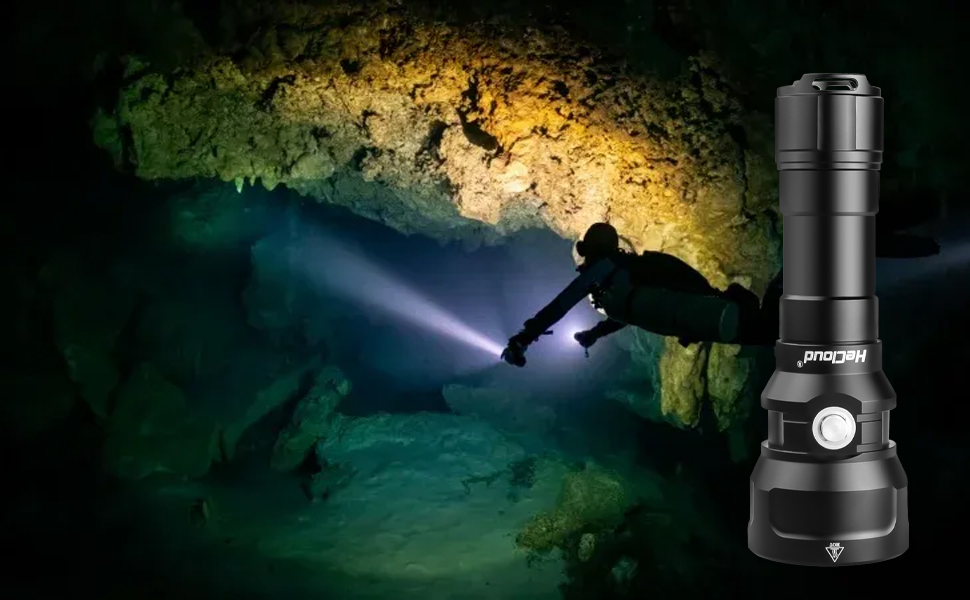
With a good dive light, small marine life becomes easier to spot. Shrimps, crabs, octopuses, and other nocturnal species often become active after sunset. The beam of a dive flashlight helps reveal movement in crevices and along coral structures that would otherwise remain invisible.
Restoring Color Beneath the Surface
Water absorbs different wavelengths of light at varying depths. Even during daytime dives, red and orange colors fade quickly underwater. At night, without a light source, objects may appear almost monochrome.
A well-designed dive light helps restore these colors. Coral formations, fish patterns, and underwater textures appear more vivid when illuminated by a focused beam. This allows divers not only to navigate safely but also to fully appreciate the underwater environment.
Improving Safety and Communication
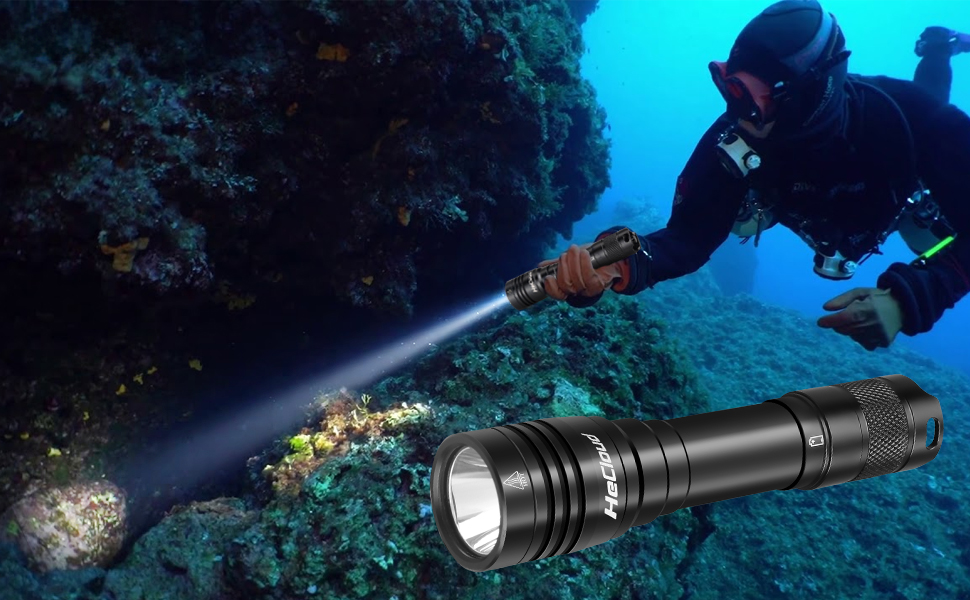
Lighting is not only about visibility; it also plays an important role in diver safety.
A dive light allows divers to:
- Signal dive partners
- Check gauges and equipment
- Identify underwater obstacles
- Maintain orientation during ascent or descent
Many divers also carry a primary light and a backup light for redundancy. If one light fails, the second ensures the dive can continue safely.
Beam Design Matters
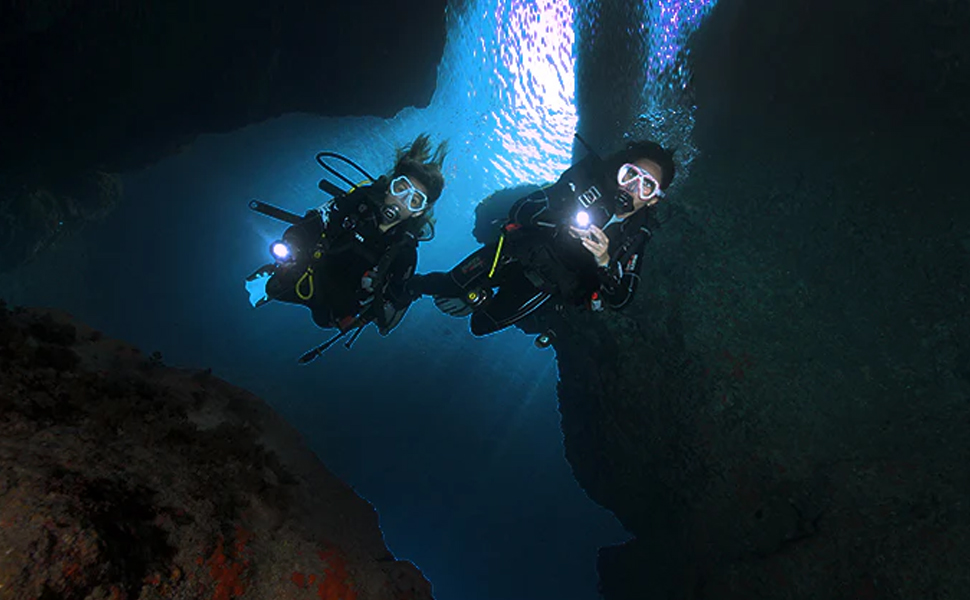
Not all lights perform the same underwater. Several characteristics influence how effective a dive light will be.
Beam Angle
A narrow beam can reach farther and highlight specific objects, while a wider beam illuminates a larger area.
Brightness (Lumen Output)
Higher lumen output provides stronger illumination, especially useful in deeper or darker environments.
Waterproof Rating
A proper dive light must be designed for underwater pressure and sealed to prevent water entry.
Battery Reliability
Long runtime ensures the light lasts throughout the dive, including safety stops and the return to the surface.
Hands-Free Convenience
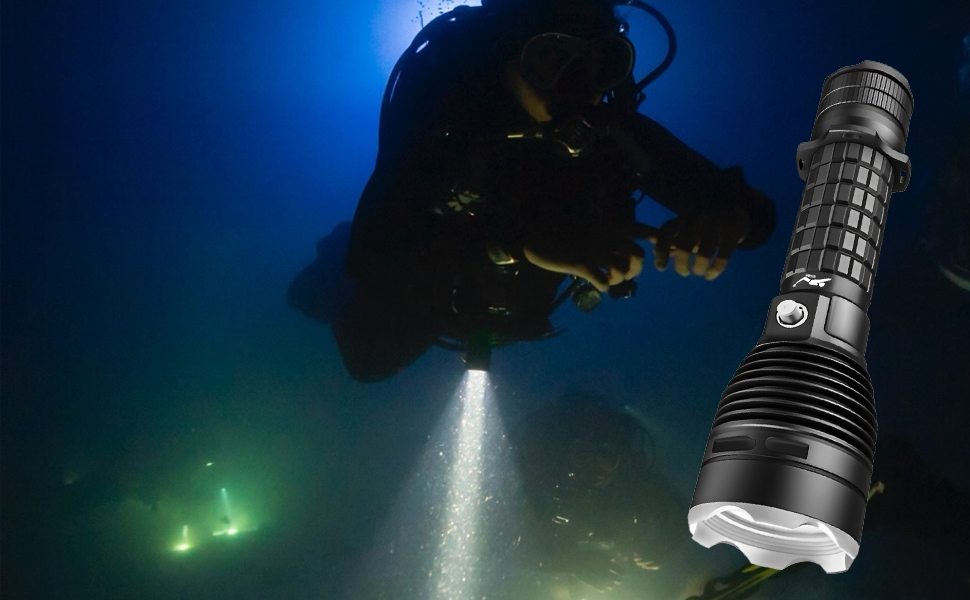
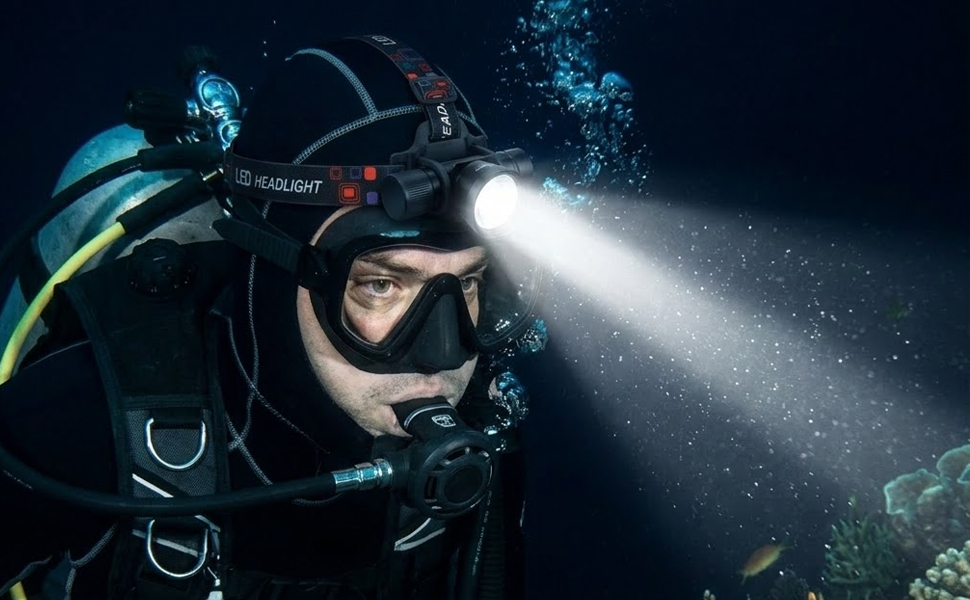
Some divers prefer head-mounted dive lights or helmet-mounted lights during activities that require both hands. Underwater photography, equipment adjustments, or exploring narrow spaces becomes easier when the light moves with the diver’s head.
This type of lighting solution is especially useful for technical dives or underwater work.
The Key to Enjoying Night Diving
Night diving offers a calm and fascinating perspective of the ocean. The absence of daylight encourages divers to slow down, observe carefully, and notice small details that might be missed during daytime dives.
But this experience depends greatly on proper lighting. A dependable dive light allows divers to explore safely, see natural colors, and interact with the underwater world in a controlled way.
With the right light in hand, the darkness of the ocean becomes an invitation rather than an obstacle.


