Whether you're exploring a vibrant coral reef at night or navigating through a deep underwater cave, having the right dive light can significantly enhance both safety and visibility. Dive lights are essential tools for recreational and technical divers alike, but choosing the right one depends largely on the type of diving you plan to do. In this guide, we'll break down what to consider for deep diving, night diving, and cave diving.
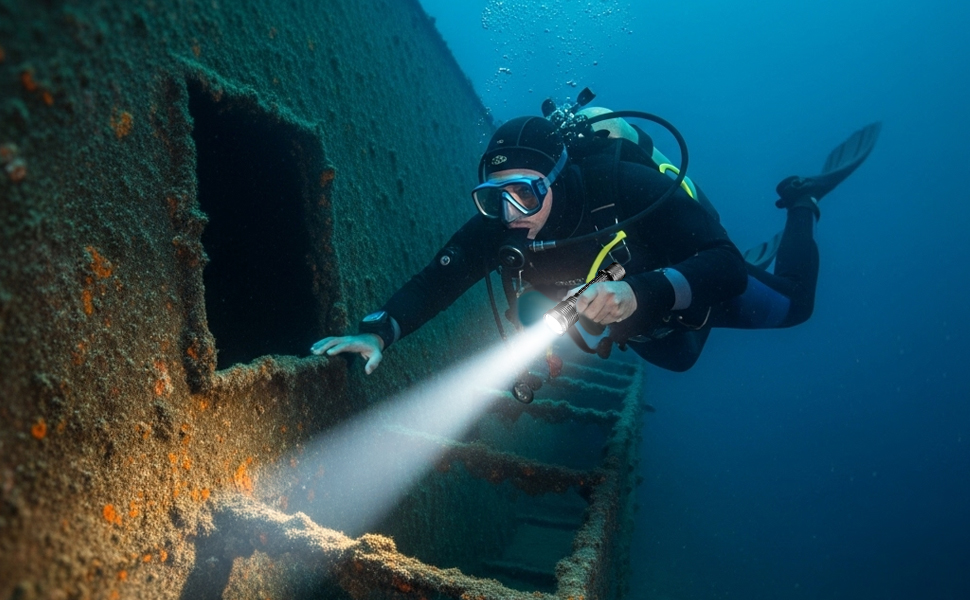
🌊 1. Deep Diving: Prioritize Beam Distance and Pressure Resistance
When diving beyond recreational limits (usually deeper than 30 meters), ambient light fades rapidly, and the water pressure increases significantly. In this environment, you’ll need a dive light with:
-
High lumen output to pierce through dark waters
-
Narrow and focused beam for better long-distance visibility
-
Strong pressure resistance, typically rated for depths of 100 meters or more
-
Durable aluminum alloy housing that protects internal components from deformation
🌌 2. Night Diving: Opt for Wide Illumination and Color Accuracy
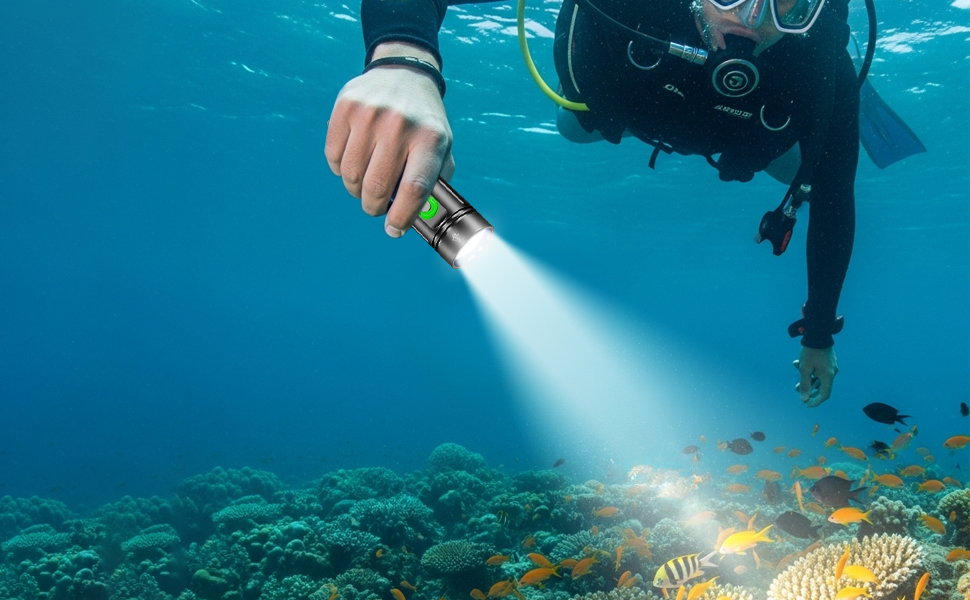
Night diving opens up a completely different world of marine life, but navigating in pitch darkness requires a light that mimics natural daylight. Here’s what to look for:
-
Wide beam angle (over 60°) for broader coverage
-
Warm color temperature to reveal true underwater colors and avoid startling marine life
-
Stable brightness control, to avoid sudden dimming
-
Backup light is strongly recommended, just in case the primary fails
🦑 3. Cave Diving: Focus on Reliability and Penetration Power
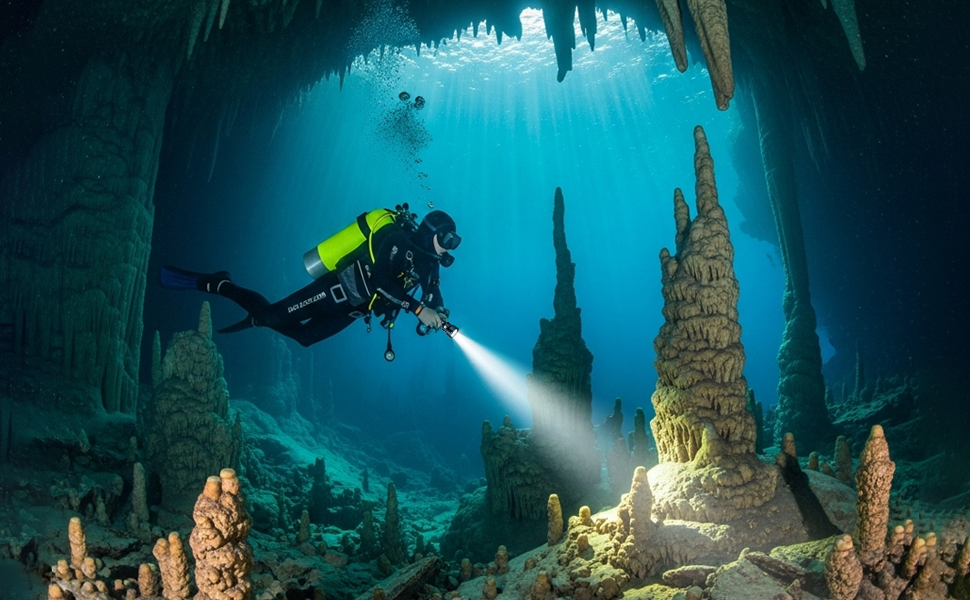
Cave diving involves tight spaces, low visibility, and the need for precise navigation. In these conditions, your dive light should be:
-
Highly reliable with long battery life, as exits may be far
-
Narrow beam angle (8°–20°) to penetrate through silt and murky water
-
Equipped with a secure mounting system such as Goodman handle or helmet mount
-
Multiple light modes, including strobe for signaling
🔋 Additional Tips:
-
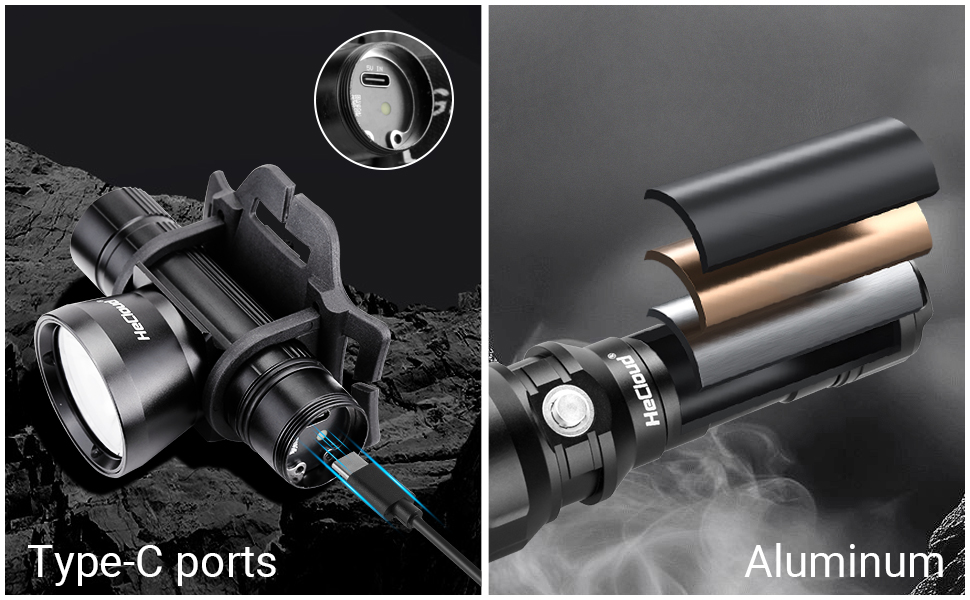
Battery type and charging: Lithium-ion rechargeable batteries are ideal for longer runtime. Type-C ports make charging more convenient.
-
Material: Choose lights with corrosion-resistant materials like aluminum or high-grade plastics.
-
Red indicator lights: Some dive lights feature a rear red light for buddy tracking during group dives.
Final Thoughts
A good dive light not only illuminates your path but also protects you by improving visibility and allowing for effective communication. Make sure you choose one that fits your diving style and environment.


