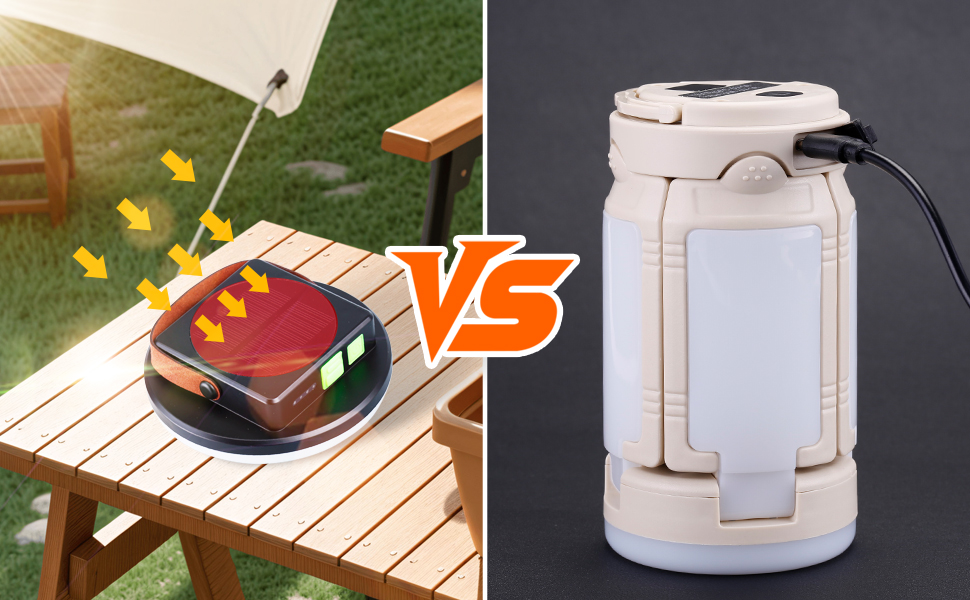
Solar vs. Traditional Camping Lights: Which One Fits Your Camping Needs?
Home > News > Camping Lanterns > Solar vs. Traditional Camping Lights: Which One Fits Your Camping Needs?
Aug.2025 03

Solar vs. Traditional Camping Lights: Which One Fits Your Camping Needs?

Introduction
When preparing for an outdoor trip, lighting is one of the most important items to consider. A reliable camping light ensures safety, visibility, and comfort after dark. But should you go for a solar-powered camping light or stick with a traditional battery- or fuel-powered light? Let’s explore the key differences between the two, weighing the pros and cons to help you choose the best fit for your next adventure.
Details

🔋 Power Source and Convenience

Solar Camping Lights:
These lights use solar panels to charge during the day. Most come with built-in rechargeable batteries and some also offer USB charging as a backup.

Pros:

  • No need to carry spare batteries or fuel.

  • Ideal for long stays with sunny weather.

  • Often environmentally friendly and cost-effective over time.

Cons:

  • Depend heavily on sunlight; charging can be slow on cloudy or rainy days.

  • May require positioning in direct sunlight for optimal charging.

Traditional Camping Lights:
These include LED lanterns powered by disposable or rechargeable batteries, and gas lanterns fueled by propane or white gas.

Pros:

  • Reliable performance regardless of weather conditions.

  • Ready to use anytime, as long as you have fuel or charged batteries.

  • Often provide brighter or adjustable light output.

Cons:

  • Require spare batteries or fuel canisters.

  • Some models can be heavier or bulkier.

  • Fuel lanterns may require extra care for safe use.

🌲 Use Scenarios and Flexibility

Solar Lights Are Best For:

  • Eco-conscious campers who want to reduce waste.

  • Daytime hikers or campers with access to sunlight.

  • Short-to-medium camping trips where charging during the day is feasible.

Traditional Lights Are Better When:

  • You expect cloudy or rainy weather.

  • You're camping in heavily forested or shaded areas.

  • You need consistent, strong light for tasks like cooking or hiking at night.

⚖️ Final Thoughts: How to Choose

Ask yourself the following:

  • Will you have access to enough sunlight during your trip?

  • Do you want a more sustainable option or prioritize performance?

  • Are you willing to carry fuel or extra batteries?

If you prioritize sustainability, travel light, and expect decent weather, a solar camping light can be an excellent choice.

If you need maximum brightness, dependability in all weather, or you're heading deep into the wilderness, a traditional camping light might be more suitable.

Ultimately, both types can be useful — some campers even bring both to cover all scenarios.

Message Us