Many divers believe that turning on a light underwater simply makes everything brighter. In reality, light behaves very differently once it enters water. Understanding the physics behind underwater light can help divers choose the right equipment, improve visibility, and better interpret what they see below the surface.
How Water Changes the Behavior of Light
When light travels through air, it moves relatively freely. Underwater, however, light encounters a much denser medium. This density causes light to:
-
Lose intensity more quickly
-
Scatter in multiple directions
-
Be absorbed at different rates depending on color
As a result, even powerful lights may appear less effective underwater than expected.
Light Absorption: Why Colors Disappear First
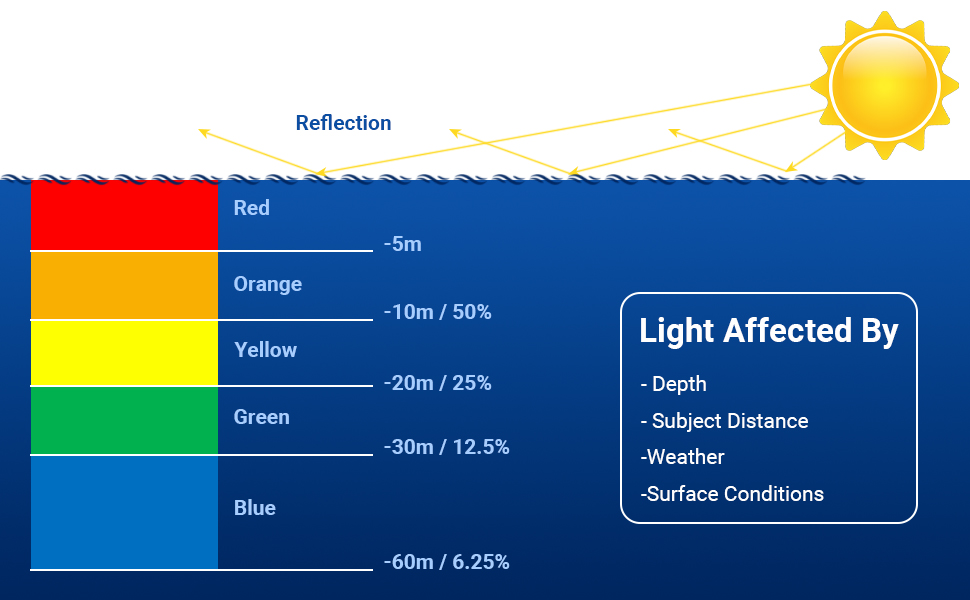
One of the most noticeable effects of water on light is color absorption. Water absorbs different wavelengths of light at different depths:
-
Red light fades within the first few meters
-
Orange and yellow disappear shortly after
-
Green and blue travel farther, which is why underwater scenes often appear blue
This means that objects underwater may look dull or colorless without an artificial light source, even in clear conditions.
Scattering: The Hidden Enemy of Visibility
Besides absorption, scattering plays a major role in underwater lighting. Particles such as sand, plankton, and organic matter cause light to bounce unpredictably. This scattering can:
The way a light beam is shaped—wide or focused—can significantly affect how well a diver sees in these environments.
Why Brightness Alone Is Not Enough
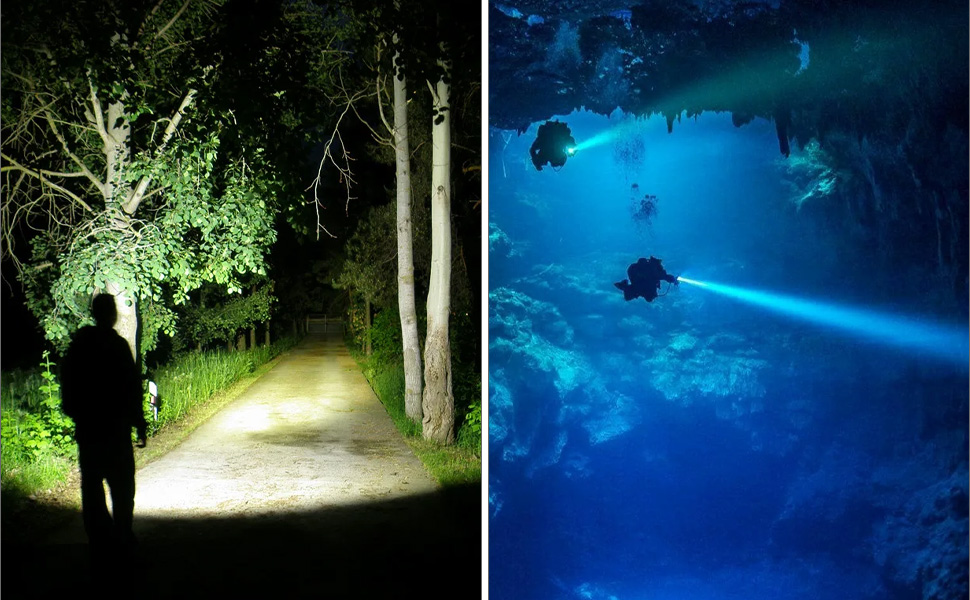
Many divers assume higher brightness automatically means better visibility. In reality, brightness must be balanced with beam angle and water conditions.
Effective underwater lighting depends on matching beam characteristics to the dive environment, not simply increasing output.
Distance Matters More Than You Think
Underwater, light intensity drops rapidly with distance. Even strong beams lose effectiveness just a few meters away. This explains why:
For divers, this reinforces the importance of positioning and distance rather than relying solely on power.
Restoring Color and Detail with Artificial Light
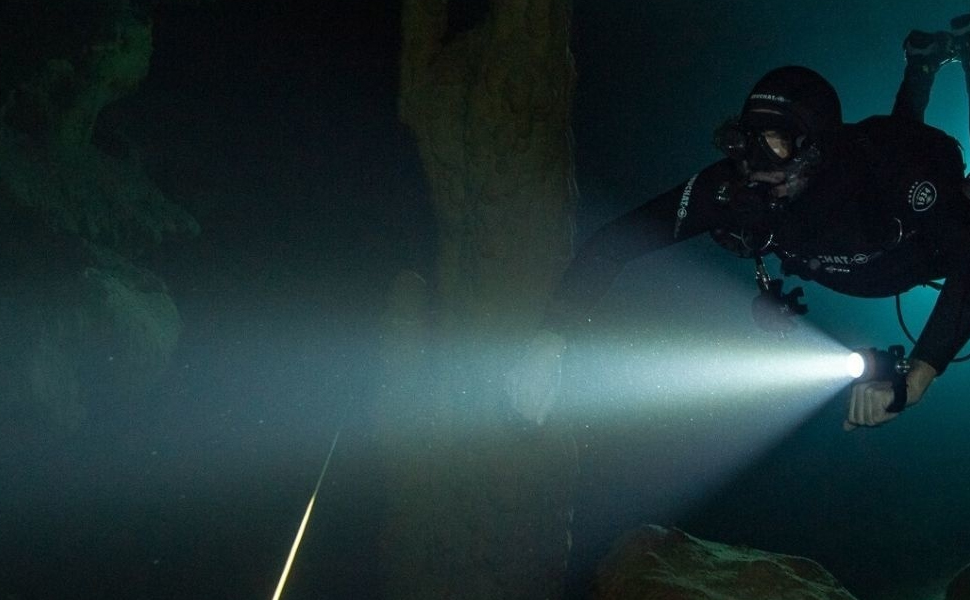
Artificial dive lights do more than illuminate—they restore lost color and detail. When a light source is close to an object, it reintroduces wavelengths that water has absorbed, allowing divers to see textures and colors as they exist above water.
This is especially important for underwater photography, inspection dives, and night diving, where natural light is minimal or absent.
Understanding Light Leads to Better Diving Decisions
Recognizing how light behaves underwater helps divers:
-
Choose appropriate beam angles for different environments
-
Position lights more effectively
-
Set realistic expectations for visibility
Rather than chasing brightness alone, informed divers focus on control, placement, and understanding of light physics.
Conclusion
Underwater lighting is not just about making things brighter. Water absorbs, scatters, and alters light in ways that challenge human perception. What appears “well-lit” on land may behave very differently below the surface.
By understanding the physics of underwater light, divers gain clearer vision, safer dives, and a deeper appreciation of the underwater world—not just what is illuminated, but how it is truly seen.


