Dive lights are often regarded as essential equipment for night diving. However, their functions go far beyond providing illumination in dark waters. In various underwater environments and situations, dive lights offer practical benefits that enhance safety, visibility, and the overall diving experience. Below are several common scenarios where dive lights play an important role beyond night diving.
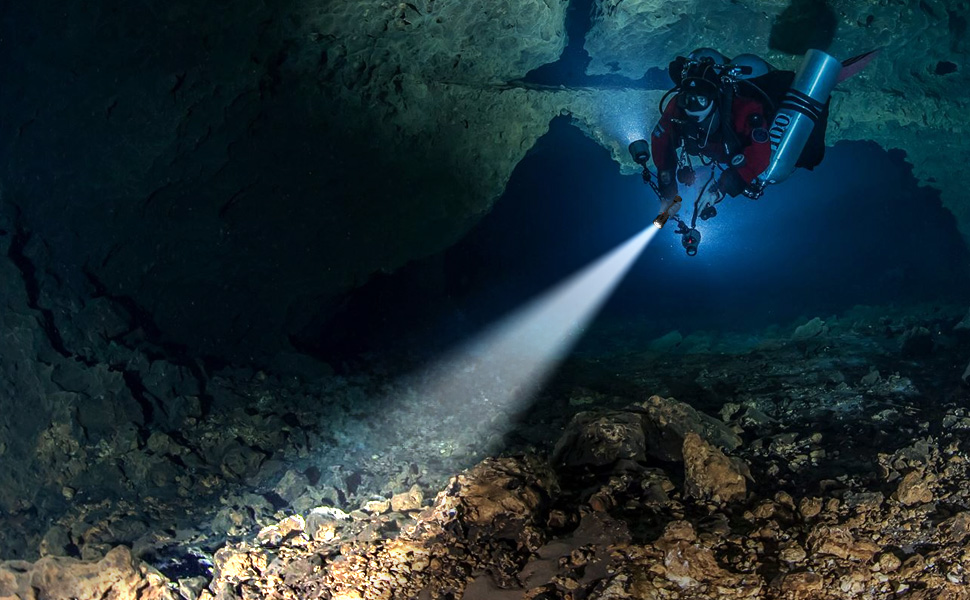
1. Cave Diving: Ensuring Visibility in Dark and Narrow Spaces
Cave diving involves exploring underwater caves where natural light cannot reach. In these confined and pitch-black environments, dive lights are indispensable for navigation, communication, and observing the surrounding environment. Reliable lighting allows divers to avoid obstacles, read maps or instruments, and maintain contact with their diving partners.
2. Underwater Photography and Videography: Enhancing Image Quality
Even in daylight conditions, natural light underwater diminishes rapidly with depth. Dive lights are widely used in underwater photography and videography to restore true colors, improve image clarity, and highlight subjects. Whether shooting marine life, underwater landscapes, or close-up details, proper lighting can greatly improve the visual effect of photos and videos.
3. Exploring Wrecks or Overhangs: Lighting Hard-to-Reach Areas
When diving around shipwrecks or under overhangs, certain areas may be hidden in shadows even during the day. Dive lights help divers inspect details, enter dark compartments, or search for specific objects safely.
4. Emergency Situations: Providing Backup Lighting
Unexpected situations can occur during any dive. Dive lights serve as an important backup tool when visibility suddenly decreases due to environmental factors like sediment clouds or equipment failure. Additionally, a dive light can be used to signal for help or communicate with other divers when other methods are limited.
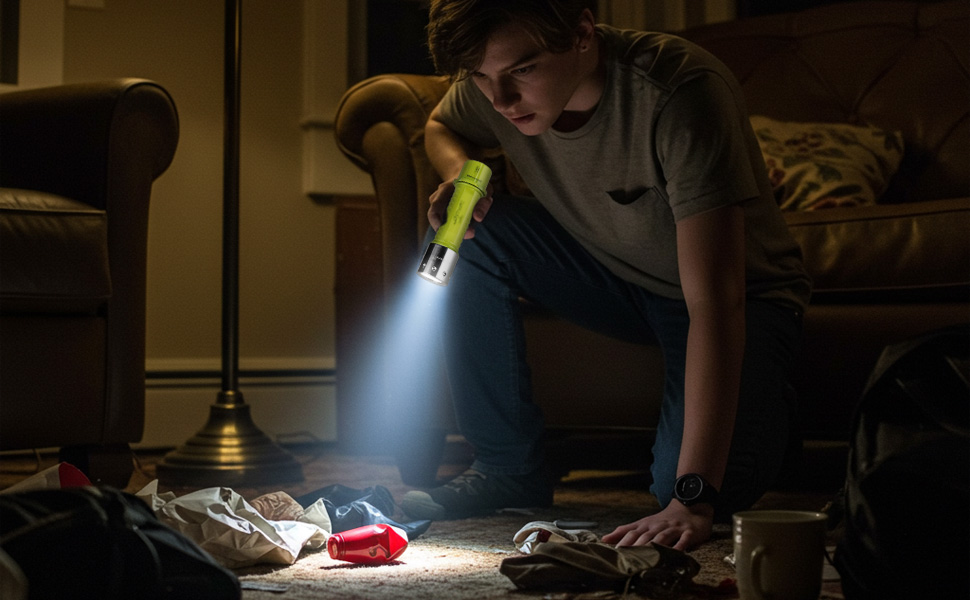
5. Day Diving in Low-Visibility Waters: Improving Safety and Orientation
In some waters with poor visibility caused by plankton, sediments, or weather conditions, dive lights can help divers identify directions, avoid obstacles, and maintain awareness of their surroundings.
Conclusion
Dive lights are much more than night diving equipment. Their multifunctional nature makes them valuable in various diving activities, from exploring dark underwater environments to improving photography results and enhancing safety in emergencies. Choosing the right dive light according to specific diving needs can greatly enrich the diving experience and ensure better underwater visibility and communication.


