Light color temperature is a key factor that affects how we perceive lighting. It measures the color tone of the light in degrees Kelvin (K), influencing the warmth or coolness of the light we see. Whether you're lighting up your home, working in a professional environment, or exploring the outdoors, choosing the right color temperature can make a significant difference in comfort, visibility, and overall experience.
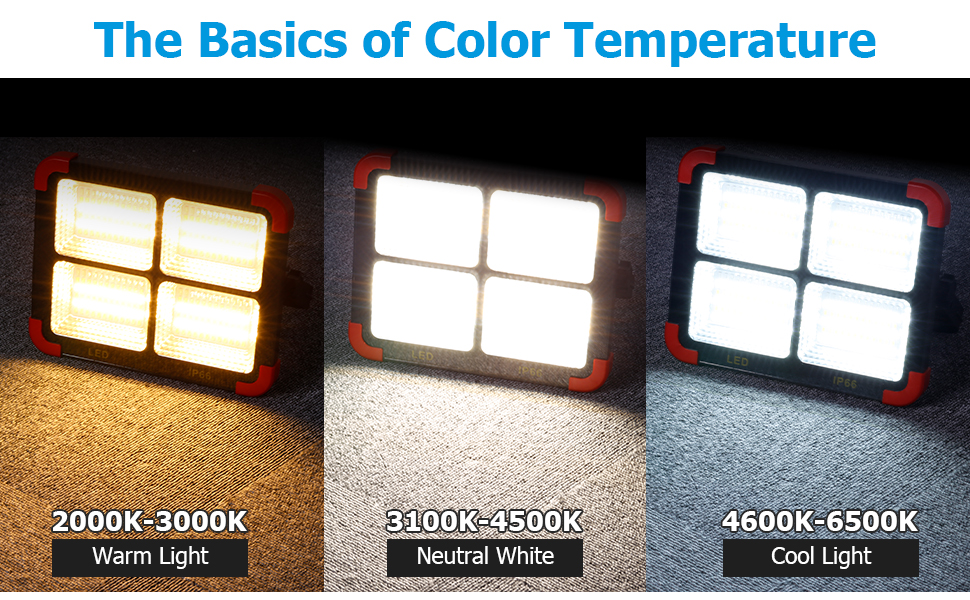
The Basics of Color Temperature
Color temperature is measured on a scale in Kelvin (K), ranging from warm tones to cool tones. Here are the general categories of color temperature:
- 2000K - 3000K: Warm light with a yellow or orange glow, similar to sunset light.
- 3100K - 4500K: Neutral white light, providing a balance between warmth and coolness.
- 4600K - 6500K: Cool light with a bluish-white appearance, similar to daylight at noon.
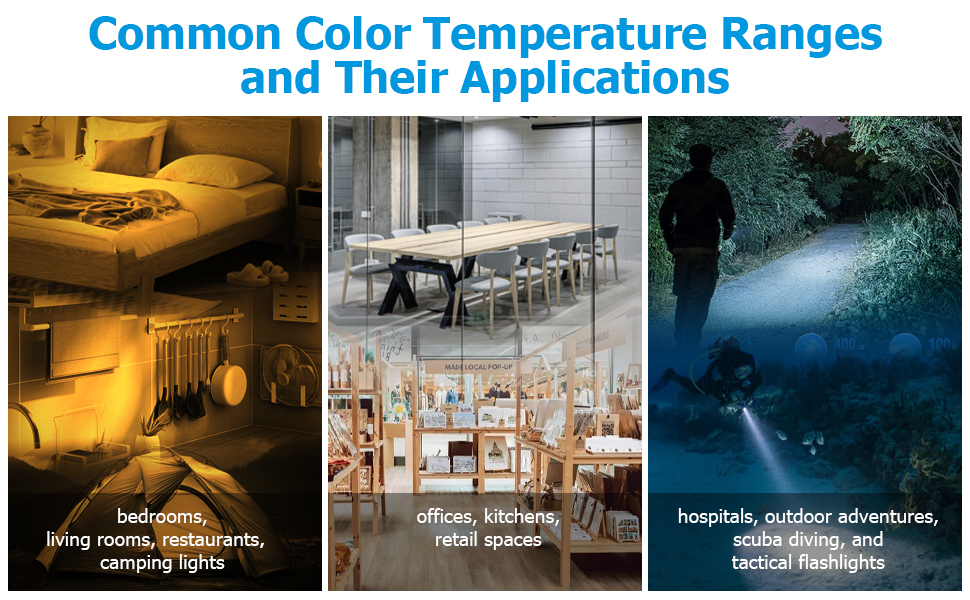
Common Color Temperature Ranges and Their Applications
-
2000K - 3000K (Warm Light)
- Best Uses: Ideal for spaces where you want a relaxing, cozy atmosphere, such as bedrooms, living rooms, restaurants, and for camping lights.
- Effect: Creates a warm and inviting feel, perfect for unwinding after a long day.
-
3100K - 4500K (Neutral White Light)
- Best Uses: Suitable for offices, kitchens, retail spaces, and work environments where clarity is essential.
- Effect: Provides a clean and bright light that helps with concentration and productivity.
-
4600K - 6500K (Cool Light)
- Best Uses: Works well in settings that demand high visibility and precision, such as hospitals, outdoor adventures, scuba diving, and tactical flashlights.
- Effect: Delivers crisp, clear light that enhances visibility in challenging environments.
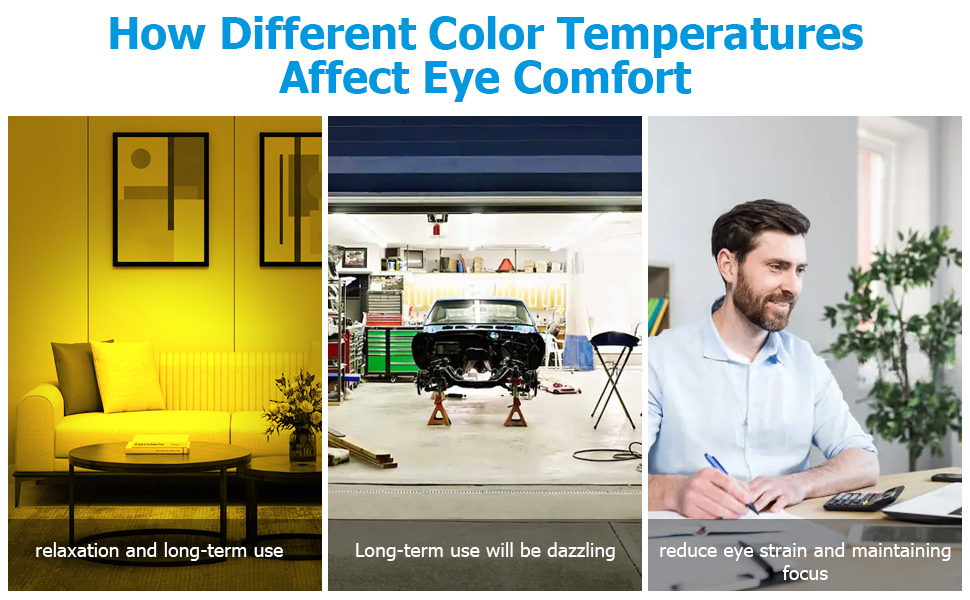
How Different Color Temperatures Affect Eye Comfort
Choosing the right color temperature can significantly impact eye comfort. Warm light (2000K - 3000K) is easier on the eyes for relaxation and long-term use, while cool light (4600K - 6500K) can be harsh if used for extended periods. When working for long hours, using neutral white light (3100K - 4500K) can help reduce eye strain while maintaining focus.
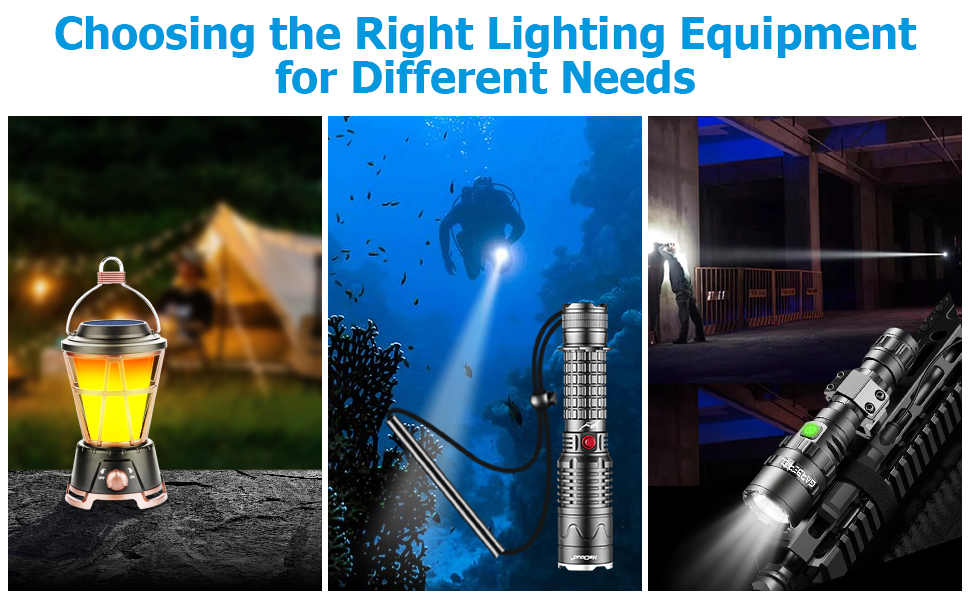
Choosing the Right Lighting Equipment for Different Needs
Selecting the right light color temperature depends on the application. For home environments, warm light is often preferred for comfort. In workspaces or task-oriented settings, neutral white light is a good choice for providing clarity without being too harsh. For outdoor adventures, cool light is ideal due to its higher brightness and ability to cut through fog, water, or darkness.
For example:
- Camping: A warm light helps create a welcoming and comfortable environment after sunset.
- Diving: Cool light enhances underwater visibility, helping divers see clearly in darker, deeper waters.
- Tactical Operations: Cool light ensures high visibility and accuracy, crucial for precision tasks.
Outdoor Tips for Using Color Temperature
- Camping: Opt for warm light to mimic a fire-like ambiance.
- Diving: Cool light is your best option for improved underwater clarity and distance.
- Exploration: Consider using a mix of warm and cool lights depending on the terrain and environment.
Conclusion
Understanding light color temperature is vital for optimizing your lighting experience. Whether you're at home, at work, or in the great outdoors, choosing the appropriate color temperature can enhance comfort, visibility, and performance. Consider your specific needs and activities when selecting lighting equipment to ensure the best possible results.


