Understanding the Relationship Between Diving Depth and Illumination — How Many Lumens Do You Really Need?
Home > News > Diving Lights > Understanding the Relationship Between Diving Depth and Illumination — How Many Lumens Do You Really Need?
Nov.2025 23

Understanding the Relationship Between Diving Depth and Illumination — How Many Lumens Do You Really Need?

Introduction
For divers, light is more than just visibility—it’s safety, navigation, and the key to discovering the underwater world in its true colors. But as you descend deeper, light behaves differently. Understanding how depth affects brightness helps you choose the right dive light for your needs.
Details

Why Does It Get Darker Underwater?

When sunlight enters the water, it begins to scatter and absorb. The deeper you go, the more light is lost.

  • At 5 meters, red and orange tones fade first.

  • At 10–15 meters, yellow and green weaken.

  • Beyond 20 meters, only blue and violet wavelengths remain, giving the underwater world its deep blue tone.

That means even in clear tropical waters, colors quickly disappear, and your visibility depends entirely on artificial light.


How Many Lumens Are Enough for Diving?

The required brightness—measured in lumens—depends on both depth and environmental conditions.

Diving Condition Recommended Lumens Notes
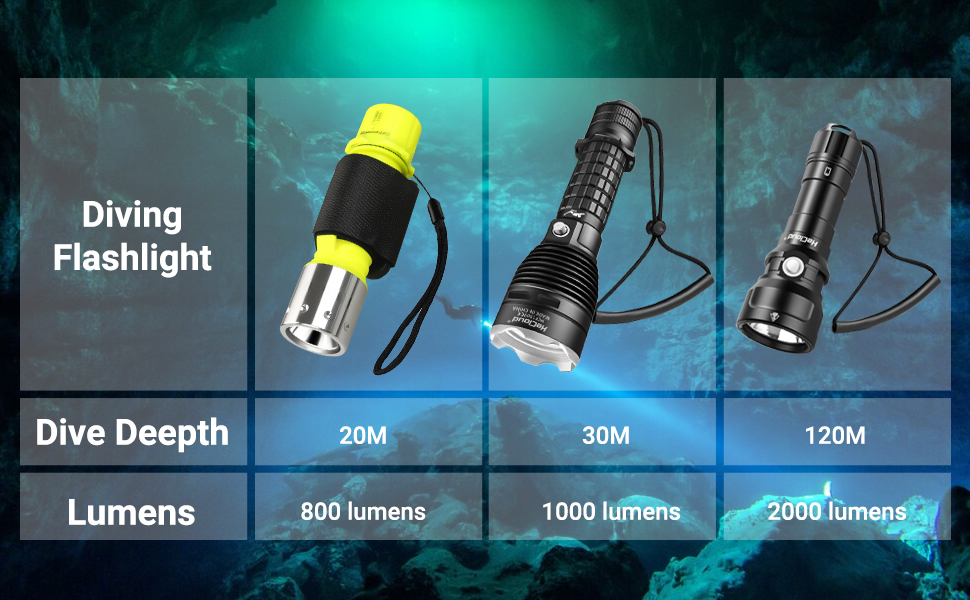
Shallow dives (0–10 m) 500–1000 lumens For coral reefs or snorkeling in daylight
Moderate depth (10–30 m) 1000–2000 lumens Balanced brightness for clear visibility and color recovery
Deep or night dives (30 m+) 2000–4000 lumens or higher Needed for navigation and wide illumination in low-light environments

Keep in mind: higher lumens don’t always mean better lighting. Beam angle, lens quality, and color temperature also affect visibility. A narrow beam (10–15°) can cut through murky water, while a wider beam (60–90°) suits underwater photography or cave diving.


Choosing the Right Light for Your Dive

When selecting a dive light, consider these factors:

  1. Type of diving – Night, cave, or deep-sea diving requires stronger and longer-lasting lights.

  2. Beam type – Spot beams focus light for distance; flood beams spread light for wider coverage.

  3. Battery life – Longer dives need consistent brightness throughout.

  4. Build quality – A good aluminum or stainless steel housing prevents corrosion and pressure damage.


Final Thoughts

Depth dramatically affects how light travels underwater, so choosing the correct lumen range can make the difference between a dim dive and a vividly illuminated experience. Whether you’re exploring shallow reefs or venturing into deeper waters, the right dive light helps reveal the underwater world as it truly is—vivid, detailed, and full of life.

Message Us